What do textile brands really expect in 2026?

What do textile brands really expect in 2026?

In 2026, fashion no longer just follows trends — it shapes them, tracks them and transforms them into strategic decisions.

Across Europe, textile brands are redefining their priorities. Creativity still matters. But what’s taking the lead now is transparency, digitalisation and agility.
Behind every new collection lies a clear demand: more autonomy, more flexibility and more impact.

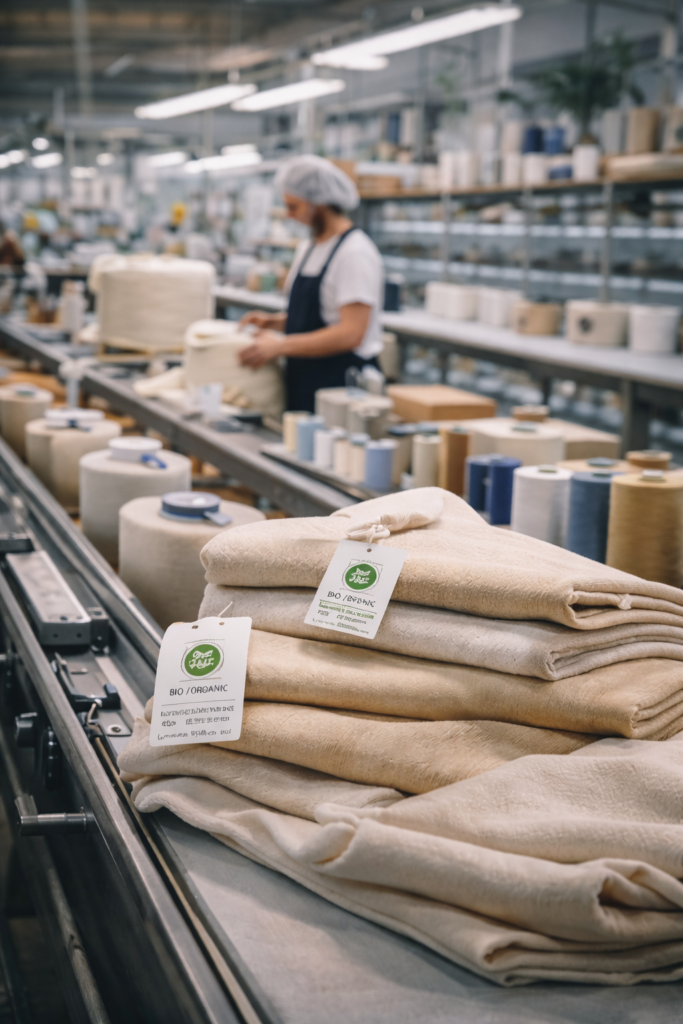
Sustainable textile production facility with organic fabric rolls on a conveyor belt, eco-labels visible, and a worker in the background inspecting yarn.

A transformation driven by 3 forces

1. Regulatory pressure

Between CSRD, digital product passport and environmental labeling, sourcing can no longer remain opaque. Brands are now expected to trace, document and justify every step of their production process. Textile traceability is becoming a strategic necessity — far beyond just a marketing argument.

2. Consumers raising the bar

The market demands proof, not promises. In 2026, expectations around sustainability, transparency and local production require brands to show — clearly and instantly — how their products are made.

3. The digitalisation of textile sourcing

Advanced tools are no longer reserved for industry giants. Today, small and mid-sized players are also turning to:

  • B2B textile platforms to source smarter and faster,

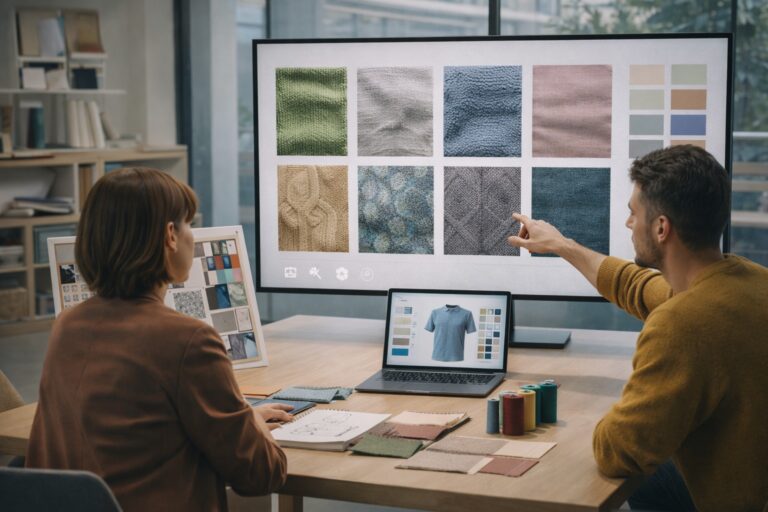
  • virtual showrooms to better showcase their collections,

  • product configurators to simplify workflows and decision-making.

Fully digital textile sourcing is no longer a trend — it’s the new standard.

What brands expect in 2026

Brands aren’t just looking for “a tool.” They’re looking for a fluid experience, a modular system and a tech partner who understands their world.

Here’s what they expect:

  • a flexible textile marketplace solution, tailored to their identity, not the other way around;

  • a platform that supports product customization, team collaboration and supplier management — without complexity;

  • a visual and immersive interface that brings their prints, ideas and collections to life.

In short: they want practical solutions to save time, reduce physical prototypes and accelerate their time-to-market.

What’s next?

At S2G XR, we’ve been listening to these expectations from day one.

That’s why we’ve built a real-time 3D textile configurator, virtual showrooms accessible 24/7, a modular B2B marketplace designed for traceability, collaboration and product personalization

Our mission? To give European textile brands a faster, more visual, more connected sourcing experience — without sacrificing identity or agility.

Want to see how S2G XR supports the future of textile sourcing? Book a live demo with our team. The future of fashion starts here.