

2025 is a landmark year for the textile and fashion industry. Between increasing regulatory pressure, shifting consumer expectations, rising environmental standards, and accelerated digital transformation, the sector is being reshaped.
Technology is no longer a nice-to-have — it’s the backbone of a more agile, transparent, and efficient value chain.
Here are the 5 key innovations redefining how we design, source, and produce in the textile world today.
1. Artificial intelligence & smart design tools
Artificial Intelligence is making its mark in textile design. From trend forecasting to pattern generation and collection planning, AI tools are streamlining creative decisions while improving accuracy and market fit.
Designers now use platforms that generate color palettes, suggest fabric pairings, and simulate bestsellers — all based on real-time data.
The result? Faster development, fewer wrong calls and collections that resonate.
2. 3D showrooms & immersive digital spaces
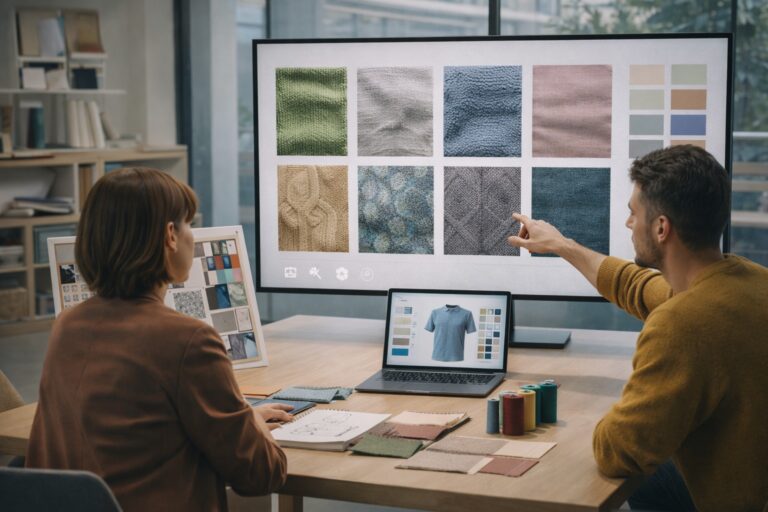
3D virtual showrooms have gone from experimental to essential. These interactive environments allow brands and buyers to explore collections in detail, without the need for travel or physical samples.
Immersive showrooms combine the best of 3D rendering, intuitive browsing, and product storytelling — making digital sourcing more engaging and efficient.
They’re also paving the way for global collaboration and faster decision-making.
3. Blockchain & full supply chain traceability
Transparency is now non-negotiable. Blockchain technology is bringing verified traceability to the textile industry — from raw materials to finished garments.
Each step of the journey is recorded and accessible, providing proof of origin, labor practices, and sustainability certifications.
For brands, it means compliance and consumer trust. For suppliers, it’s a chance to showcase their value and differentiate themselves.
4. Smart textiles & advanced materials
Smart fabrics are becoming mainstream. We now see garments that adjust to temperature, monitor health data, or even charge devices — all thanks to integrated sensors and responsive materials.
Alongside that, next-gen sustainable fibers (bio-based, recycled, circular) are reshaping how collections are produced, responding to the demand for greener fashion without compromising on quality or performance.
5. 3D printing & digital manufacturing
3D textile printing is no longer a futuristic concept. It’s enabling on-demand production, hyper-personalization, and zero-waste prototyping.
Digital manufacturing allows brands to experiment, iterate, and produce without the limitations of traditional methods — while also reducing inventory risks and shortening lead times.
More than trends — it’s a new mindset
These innovations are not just buzzwords. They’re tools designed to meet the real challenges of the industry: traceability, sustainability, speed, and creativity.
In 2025, digitalization is no longer optional. It’s the key to staying relevant, competitive, and connected.
Curious to explore how these innovations can accelerate your textile business? Let’s talk. Book a live demo !
S2G XR at Milano Unica: Extended Reality Makes Its Debut in High-End Textiles
We are thrilled to announce that Mitwill Textiles Europe will… Read more
Read moreMeet S2G XR This Summer
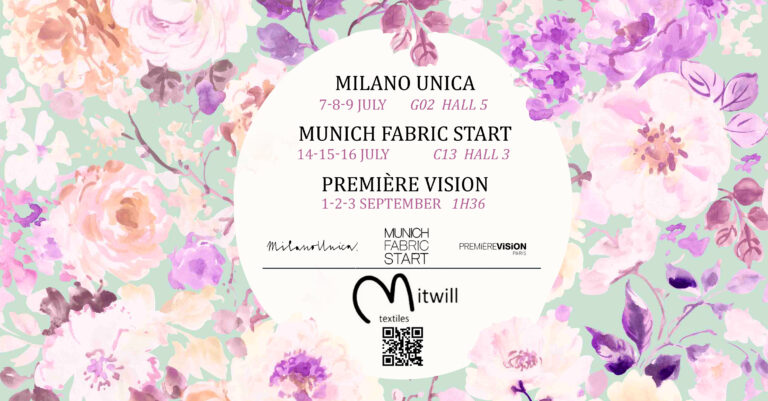
We are thrilled to announce that Mitwill Textiles Europe will… Read more
Read moreS2G XR Steps Up: Launching the Beta Version of Our 3D B2B Textile Platform
After a year already marked by strong visibility at Europe’s… Read more
Read moreWhat do textile brands really expect in 2026?
In 2026, textile brands expect more than style: they want transparency, digital...
Read more
1 comment
Comments are closed.